Groceries from the supermarket

Self-adhesive materials for the food industry

Your self-adhesive material for the food industry

„You eat with your eyes“ – this is true not only for food, but also for packaging and labels. But appearance is only one factor in labelling. Food labels can be applied under extremely difficult conditions. Labelling is performed at high speeds and in moist or cold environments. Blow-on labelling is a non-contact method of application. Labels must be able to cope with all these conditions.
Legal requirements must be considered as well. Adhesives now have to be suitable for use with fatty foodstuffs. In particular, with conventional packaging it must be ensured that the adhesive and label material do not migrate into the food if the film has insufficient barrier properties.
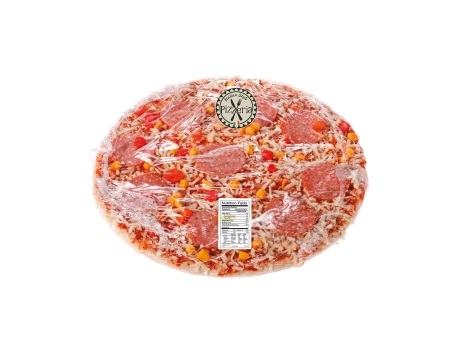


The translation of "Tiefkhlpizza" is "frozen pizza.
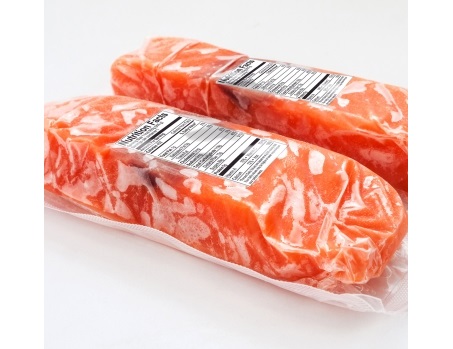
Two vacuum-packed salmon fillets with nutritional information on the labels.
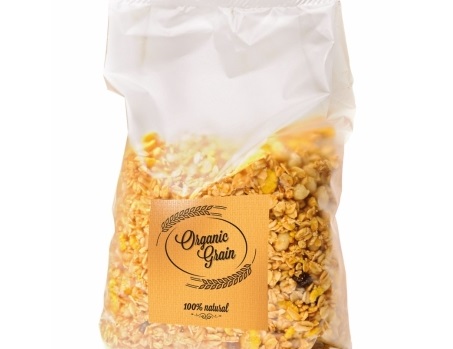
A transparent bag of granola, labelled 'Organic Grain' and '100% Natural.' The mix contains various types of grains and dried fruits.
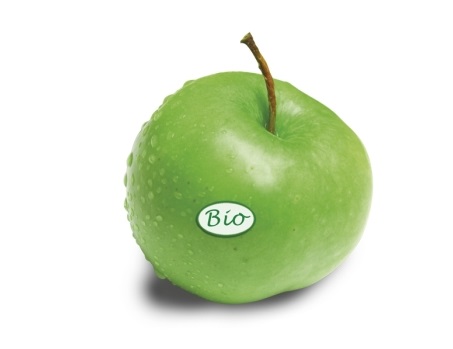
Green organic apple with a label that says 'Organic' on a white background.

A list of all adhesive composites that are suitable for the food industry can be found in our product catalogue on page 54.

Catalogue

  • What type of barrier coating is used?

    We coat our base papers with water-based dispersions using the curtain coating process. Depending on the requirements, we combine different dispersions and papers to specifically create grease barriers, water vapour barriers and heat-sealability — without the need for thick plastic film lamination.

  • Is the material recyclable in the paper stream despite the coating?

    Yes. We deliberately opt for water-based coatings rather than traditional composite materials. This ensures that the fibre content remains the dominant component, and the paper can be recycled in existing paper recycling plants, much like uncoated paper.

  • Are barrier papers plastic-free?

    No. Our water-based dispersions are polymer-based and therefore also contain plastics. However, unlike traditional paper-plastic composites, we do not use any lamination or extrusion of thick films onto the paper. Furthermore, we are already working on barrier coatings that are entirely plastic-free.

  • How do barrier papers differ from paper-plastic composites?

    In traditional paper-plastic composites, the paper is laminated with a plastic film (usually PE or PP), which makes recycling within the waste paper stream difficult or impossible. Instead, our barrier papers are coated with a thin, water-based functional layer applied directly to the paper fibres. This ensures that the material remains paper-based and can be recycled within the waste paper cycle, rather than ending up in thermal recovery.

  • What is the percentage of plastic, and why do we still have advantages in terms of PPWR?

    The plastic content is significantly lower than that of film-laminated composites and is minimised depending on the application and the required barrier properties. As paper is the main component, our material is classified under the PPWR recyclability criteria as paper-based packaging that can be recycled within the existing recycling stream — unlike composite materials, which will be subject to significantly stricter requirements in future. We would be happy to discuss specific figures and classifications in a personal meeting.

Your request to HERMA self-adhesive material