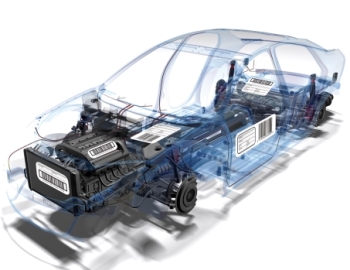
Digital vehicle model

Self-adhesive Materials for the automotive and electrical industry

Your Self-adhesive Materials for the automotive and electrical industry

The requirements in the automotive and electrical industry are very stringent and diverse. Machinery, equipment and technical components must be labelled under extreme conditions. Our adhesives are resistant to abrasion, heat and chemicals. The labels adhere firmly even when exposed to moisture and temperature fluctuations.


HERMA adhesive materials with UL certification

Underwriters Laboratories Inc. (UL) is an independent testing institute in the USA. That inspects products for compliance with consumer protection standards. UL certification is an essential criterion for products supplied to the American automotive industry. HERMA offers you a wide range of UL-certified adhesives.


Individual requirements

• TT printability
• Resistant to oil and moisture
• UL-certified
• Seawater resistance as per BS5609 Section 2 and 3

Applications

• Barcode labels
• Paint mask labels
• Engine compartment labels
• Product labels
• Security labels
• Tamper-evident labels (original closure)
• Transport labels
• Rating plates
• Equipment and machinery labels
• VDA labels

Requirements

• High scratch and smudge resistance
• UL-certified • Conformity with REACH
• Temperature resistance
• Saltwater resistance
• Rough substrates
• Very good TT printability
• Resistant to oil and moisture
• Conformity with RoHs
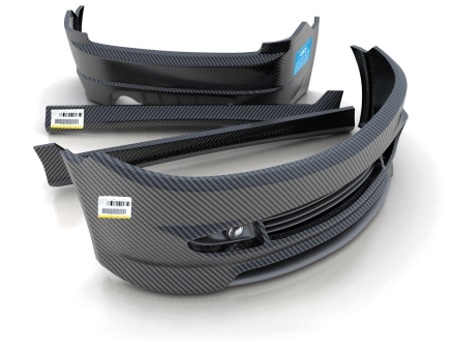
Carbon bumpers for a vehicle, including a front bumper and side panels, with labels for identification.
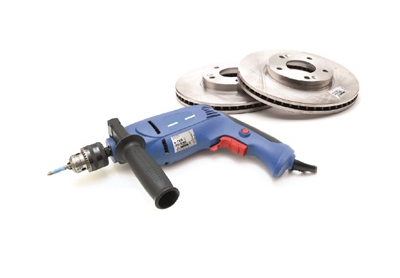
A blue drill lies next to two brake discs. The drill has a handle and a rotating tip for various applications.
Transparent depiction of a car showing the internal components and chassis, including the engine and drivetrain. Parts labelled accordingly.
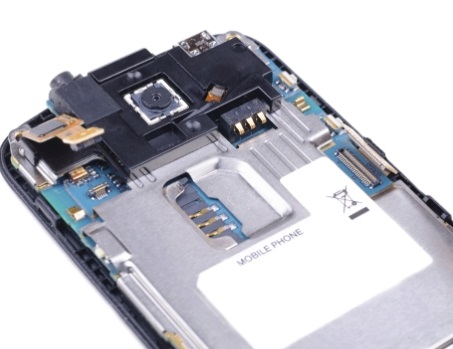
Internal components of a mobile phone, including the camera, SIM card slot, and motherboard.

A list of all adhesive composites suitable for the automotive & electrical industry can be found in our product catalogue on page 30.

Catalogue

  • What type of barrier coating is used?

    We coat our base papers with water-based dispersions using the curtain coating process. Depending on the requirements, we combine different dispersions and papers to specifically create grease barriers, water vapour barriers and heat-sealability — without the need for thick plastic film lamination.

  • Is the material recyclable in the paper stream despite the coating?

    Yes. We deliberately opt for water-based coatings rather than traditional composite materials. This ensures that the fibre content remains the dominant component, and the paper can be recycled in existing paper recycling plants, much like uncoated paper.

  • Are barrier papers plastic-free?

    No. Our water-based dispersions are polymer-based and therefore also contain plastics. However, unlike traditional paper-plastic composites, we do not use any lamination or extrusion of thick films onto the paper. Furthermore, we are already working on barrier coatings that are entirely plastic-free.

  • How do barrier papers differ from paper-plastic composites?

    In traditional paper-plastic composites, the paper is laminated with a plastic film (usually PE or PP), which makes recycling within the waste paper stream difficult or impossible. Instead, our barrier papers are coated with a thin, water-based functional layer applied directly to the paper fibres. This ensures that the material remains paper-based and can be recycled within the waste paper cycle, rather than ending up in thermal recovery.

  • What is the percentage of plastic, and why do we still have advantages in terms of PPWR?

    The plastic content is significantly lower than that of film-laminated composites and is minimised depending on the application and the required barrier properties. As paper is the main component, our material is classified under the PPWR recyclability criteria as paper-based packaging that can be recycled within the existing recycling stream — unlike composite materials, which will be subject to significantly stricter requirements in future. We would be happy to discuss specific figures and classifications in a personal meeting.

Your request to HERMA self-adhesive material