


Wraparound labelling for an all-around seamless product
HERMA develops and manufactures labelling machines, including specialised systems for
wrap-around labelling of cans, bottles, ampoules, and all other
cylindrical containers. With this type of labelling, the product is completely or
partially wrapped with the label along its circumference, which is why these are also
referred to as wrap-around labels.
This is in demand wherever the product surface must be used optimally:
An increasing number of legal labelling requirements make it necessary to fit as
much information as possible into a limited space.
Wraparound labelling for cylindrical containers is the ideal solution for this. The
label can be applied precisely over the entire circumference, thereby making
the best possible use of the available space.


This is what matters in wrap-around labelling
- Precise Application of Wraparound Labels: Even with relatively long wrap-around labels, there must be no spiral misalignment. The label must fit perfectly - without offset!
- Performance-oriented systems: With many high-volume consumer products or small-format products, high throughput and high speed must be possible.
- Interesting additional options must be available: Aligned labelling is often required, for example, to optically match the fit of a wrap-around label to an additional lid label.
- Label handling of different formats and product sizes must proceed smoothly and without major effort for changeovers.
Printing of variable data such as batch no. and best-before date must be possible.

HERMA manages to meet these requirements with its wraparound labelling systems:
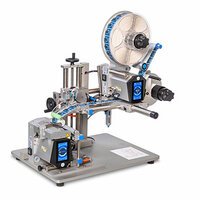
Most of the settings on our labellers can be made without tools. Easy handling is a challenge that our HERMA wrap-around labellers are happy to take on. Our labelling solutions focus on the essentials and at the same time impress with their amazing performance and high accuracy when applying wrap-around labels and wrap-around labels.
This is ensured not only by the HERMA 500 applicator used but also by various technologies, such as the roller prism technology of our best-selling HERMA 152C P labeller. At the moment of labelling, a prism sets the product to be labelled in rotation and fixes it at the same time. This almost completely eliminates spiral misalignment. Even aligned labelling succeeds perfectly.
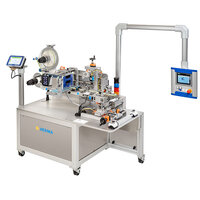
Most settings on our labelling machines can be made without tools. Batch changes are quick and easy. Installing a printing unit, such as a hot-stamping unit or a thermal transfer printer, is also easy—even as a retrofit.
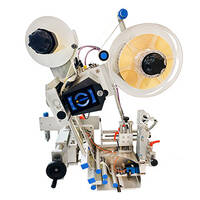
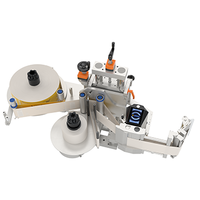
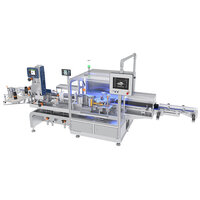
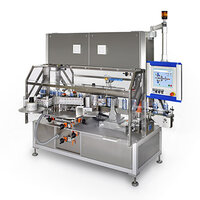
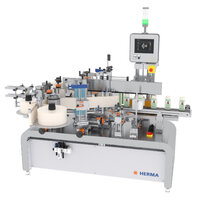
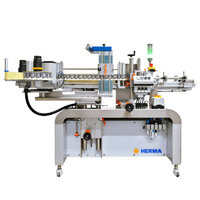
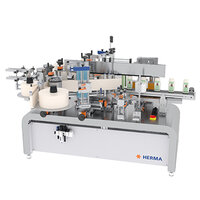
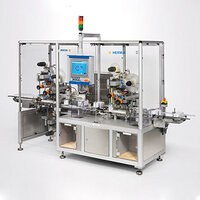
These HERMA solutions are used for your wrap-around labelling:
All-around labelling is indispensable in many industries: for labelling ampoules and vials, in the pharmaceutical industry (e.g., tablet tubes or
inhalers), for labelling cosmetics, household cleaners in
shaped bottles, for confectionery, and for food packaging—from jam in jars to cereal in cans. It is also the right choice for chemical products, cartridges, and many other cylindrical containers. Beverages represent a particularly broad range of applications, as they are typically labelled all around in large quantities by bottle labelling machines or rotary labelling machines.

Request for quotation
We produce labelling solutions according to your specifications - suitable for your application!

Please take a moment to provide us with some detailed information about your labelling solution requirements on the following page so that we can give you a good consultation.